Beginner Gardening Tools Worth Investing In (And What You Can Skip)
Starting a garden can feel overwhelming when you walk into a garden center or scroll through online stores. Every shelf seems filled with tools, gadgets, and accessories claiming to make gardening easier.
But here’s the truth most beginner gardeners learn quickly:
You don’t need dozens of tools to grow a healthy garden.
In fact, a small collection of well-chosen tools will handle nearly everything you need for planting, maintaining, and harvesting your garden.
Whether you’re growing vegetables, herbs, flowers, or fruit in raised beds, containers, or in-ground gardens, these are the tools that are truly worth investing in.
Why Having the Right Gardening Tools Matters
Good tools do more than make gardening easier — they help prevent plant damage and physical strain.
When you’re digging, pruning, or loosening soil with the wrong tools, you often end up:
• damaging plant roots
• compacting soil
• working harder than necessary
• wearing yourself out quickly
High-quality tools allow you to work more efficiently and comfortably, especially as your garden grows.
The goal is not to buy everything at once — it’s to build a small toolkit that supports the work you’ll do most often.
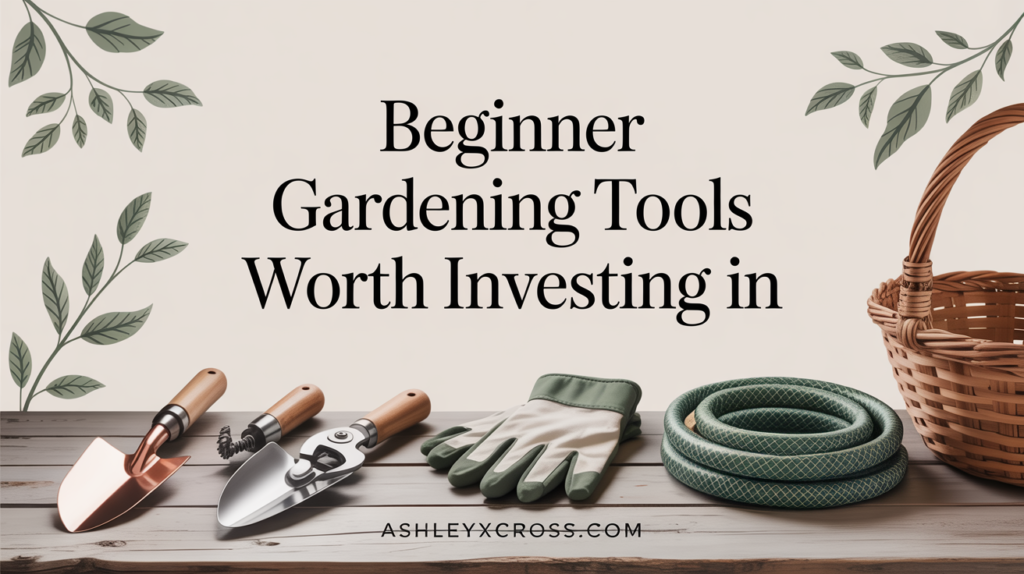
1. A Durable Hand Trowel
If there is one tool every gardener reaches for constantly, it’s a hand trowel.
This small shovel-shaped tool is perfect for:
• digging small holes for plants
• transplanting seedlings
• mixing compost into soil
• loosening compacted dirt
A sturdy hand trowel will be used nearly every time you work in your garden.
When choosing one, look for:
• stainless steel construction
• a comfortable grip
• a solid connection between handle and blade
Cheap trowels tend to bend or break when working in heavier soil, especially clay.
Investing in a durable one saves frustration later.
2. Hand Pruners (Garden Shears)
Hand pruners are essential for maintaining plant health.
They allow you to:
• trim herbs
• harvest vegetables
• prune flowers
• remove damaged leaves
• cut small branches
Clean cuts matter because they help plants heal quickly and reduce disease risk.
Look for pruners with:
• sharp steel blades
• spring-loaded handles
• comfortable grips
Many gardeners keep these clipped to a belt or basket because they are used so frequently.
3. Gardening Gloves
Gardening gloves are often overlooked, but they quickly become essential.
They protect your hands from:
• thorns
• splinters
• insects
• rough soil
• blisters
Look for gloves that are breathable but durable.
Cotton gloves are comfortable for light work, while rubber-coated gloves offer better protection for digging and handling wet soil.
4. A Garden Hose With Adjustable Nozzle
Watering is one of the most consistent tasks in gardening.
While watering cans can work for small container gardens, a quality garden hose with an adjustable nozzle makes watering far more efficient.
An adjustable nozzle allows you to control water pressure so you can:
• gently water seedlings
• rinse soil from vegetables
• deep water mature plants
Look for a hose that resists kinking and a nozzle that includes multiple spray settings.
5. A Garden Kneeler or Kneeling Pad
Gardening often involves a lot of kneeling.
A simple kneeling pad or garden kneeler can make a huge difference in comfort.
These pads reduce pressure on your knees while:
• planting
• weeding
• harvesting
• working in raised beds
Some garden kneelers even flip into small benches, which can be helpful when working in larger garden areas.
6. A Garden Fork or Cultivator
As your garden grows, loosening soil becomes more important.
A small hand cultivator or garden fork helps break up compacted soil without damaging plant roots.
It’s especially useful for:
• mixing compost into beds
• loosening topsoil
• aerating garden soil
This tool becomes particularly helpful in raised beds where soil can compact over time.
7. A Garden Harvest Basket
Once your plants begin producing vegetables, herbs, or flowers, you’ll need a place to collect them.
A harvest basket keeps your produce organized while allowing airflow so delicate items don’t bruise or spoil quickly.
Many gardeners also use harvest baskets to carry:
• pruning tools
• gloves
• seed packets
It becomes your mobile gardening station.
Tools Beginner Gardeners Often Don’t Need Right Away
Gardening stores often market tools that are unnecessary for beginners.
These include:
• large tillers
• specialized weeders
• expensive irrigation systems
• elaborate soil testing kits
These tools may become useful later, but most beginner gardens thrive with a small set of simple tools.
Start small and expand your toolkit as your garden grows.
Quality vs Quantity
One of the biggest mistakes beginners make is buying cheap tools in large sets.
While it may seem convenient, these sets often include tools that:
• break easily
• rust quickly
• are uncomfortable to use
It’s better to invest in a few durable tools you will use often rather than purchasing many inexpensive ones.
A strong hand trowel, quality pruners, and a reliable hose can last for years.
Building Your Garden Toolkit Over Time
Gardening tools should be built gradually as your garden expands.
Your first season might only require:
• hand trowel
• pruners
• gloves
• hose
As you grow more plants or expand into raised beds and larger garden spaces, you may eventually add:
• garden forks
• harvest baskets
• soil knives
• watering systems
This gradual approach helps you understand what tools you truly need rather than buying everything upfront.
Final Thoughts
Gardening doesn’t require a garage full of equipment. In fact, the most productive gardens are often maintained with just a handful of reliable tools. Focus on tools that support the tasks you’ll do most often: digging, planting, pruning, watering, and harvesting. With the right tools in hand, gardening becomes easier, more enjoyable, and far more productive. And as your garden grows, your toolkit will grow with it.